
Does Commercial Auto Insurance Cover a Work Trailer in Arizona?
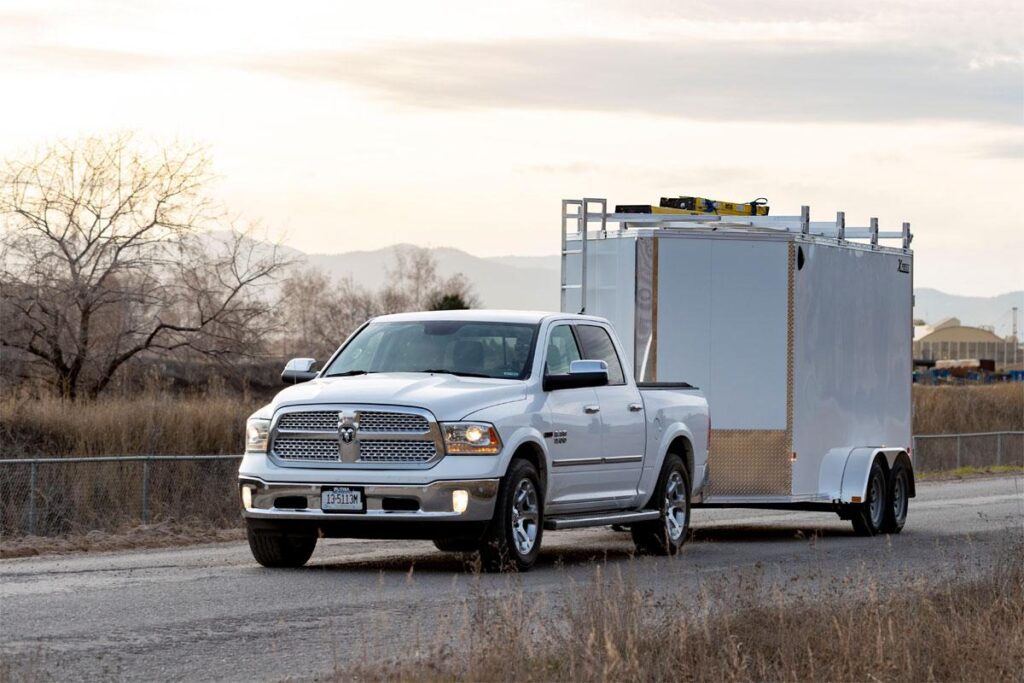
Commercial auto insurance may cover a trailer being towed by an insured work truck, but that doesn’t necessarily mean the trailer itself—or the tools and equipment inside it—are covered against theft or damage.
For Arizona contractors, this distinction is important.
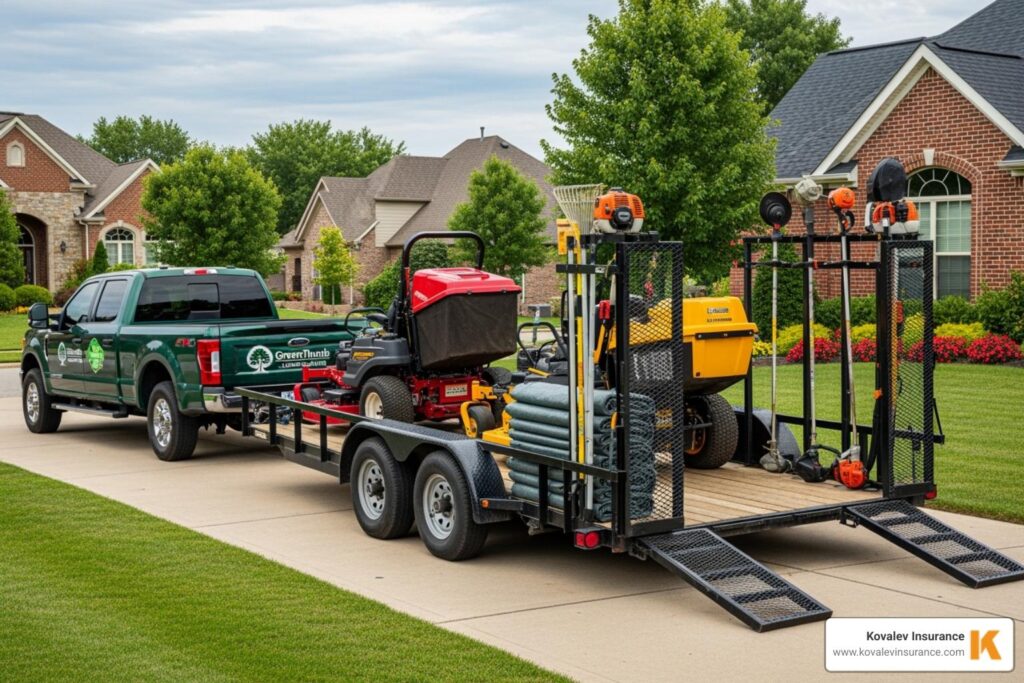
Imagine you own a landscaping company in Mesa. Your business operates a commercially insured pickup truck that regularly pulls an enclosed trailer containing lawn equipment, tools, and supplies.
One morning, you discover that the trailer and everything inside it have been stolen.
You call your insurance company, assuming the commercial auto policy covering your pickup will pay for the entire loss.
But will it?
The answer depends on how your insurance is structured. Commercial auto liability, trailer physical damage, and tools and equipment coverage can address different parts of the loss.
Understanding those differences before an accident or theft can help Arizona business owners avoid unexpected gaps in their insurance.
Is a Trailer Automatically Covered Under Commercial Auto Insurance?
Sometimes, but not for every type of loss.
Certain commercial auto policies provide liability coverage for qualifying trailers being towed by insured vehicles. However, the terms of that coverage depend on the policy, covered-auto designations, trailer characteristics, ownership, and other conditions.
For example, some standard business auto policies automatically extend certain coverage to trailers designed primarily for public-road travel with a load capacity of 2,000 pounds or less, subject to the applicable policy provisions.
That doesn’t mean every contractor trailer is automatically insured.
Larger enclosed trailers, equipment trailers, utility trailers, and specialty trailers may require separate scheduling or additional underwriting.
And even when liability coverage applies, physical damage to the trailer may be treated differently.
The safest approach is to verify that your insurer knows which trailers your business owns, rents, or regularly tows and what coverage you want for them.
Trailer Liability vs. Physical Damage vs. Equipment Coverage
One of the biggest mistakes contractors make is treating trailer insurance as a single coverage.
In reality, there are several separate exposures.
| What happens? | Coverage to evaluate |
|---|---|
| Your trailer strikes another vehicle while being towed | Commercial auto liability |
| Your trailer detaches and damages someone else’s property | Commercial auto liability |
| Your enclosed trailer is stolen | Trailer comprehensive or other applicable physical damage coverage |
| Your trailer is damaged in a collision | Trailer collision coverage |
| Tools are stolen from inside the trailer | Contractors equipment / inland marine coverage |
| A rented trailer is damaged | Applicable hired, rented, or trailer physical damage coverage |
| Materials being transported are damaged | Applicable property, inland marine, or cargo coverage |
Each claim depends on the policy’s coverage grants, conditions, exclusions, and the circumstances of the loss.
Example: A Stolen Landscaping Trailer in Mesa
Suppose a landscaping contractor owns:
- A commercially insured pickup truck
- A $15,000 enclosed trailer
- $20,000 in lawn equipment and tools stored inside
The trailer is stolen overnight.
Even if the pickup carries comprehensive and collision coverage, that does not automatically establish physical damage coverage for the trailer or its contents.
The contractor could need separate coverage for the trailer and equipment.
If your business relies on a trailer to transport valuable equipment, confirm that the trailer and its contents are insured for the losses you’re concerned about.
Shawn Orr Insurance helps Arizona contractors evaluate commercial auto, trailer, and tools and equipment coverage. Contact us to review your current insurance or request a quote.
Does Commercial Auto Liability Cover a Trailer That Causes an Accident?
Commercial auto liability insurance may respond when a covered trailer causes bodily injury or property damage to another party.
Consider an HVAC contractor driving a company pickup on an Arizona highway.
The pickup is towing a utility trailer loaded with equipment. During the trip, the trailer strikes another vehicle, causing property damage and injuries.
If the accident falls within the commercial auto policy’s coverage, liability insurance may help address covered claims against the insured.
However, coverage depends on factors such as:
- Whether the towing vehicle is a covered auto
- Whether the trailer qualifies as a covered auto
- Who owns the trailer
- Who was driving
- Whether the driver was authorized
- The business use involved
- Applicable policy exclusions and conditions
It’s important to distinguish liability for damage caused to others from insurance covering damage to the contractor’s own trailer.
What Happens if a Work Trailer Detaches From a Truck?
A detached trailer can create a serious liability exposure.
For example, an electrical contractor is towing an equipment trailer when the trailer disconnects and collides with another vehicle.
The resulting claim could involve vehicle damage, injuries, and questions about the trailer’s connection, maintenance, and operation.
Commercial auto liability coverage may respond to a covered accident, but the insurer will evaluate the applicable policy terms and facts.
Trailer safety also matters. Contractors should properly maintain couplers, safety chains, tires, brakes, lighting, and other required equipment.
Insurance is not a substitute for safe towing practices.
Does Commercial Auto Insurance Cover a Stolen Trailer?
Not necessarily.
Liability coverage does not pay to replace your own stolen trailer.
A business generally needs applicable physical damage coverage for the trailer to insure it against theft.
Comprehensive coverage, or a comparable specified physical damage coverage depending on the policy, may address certain theft losses.
However, simply having comprehensive coverage on the towing truck doesn’t establish that the trailer is insured for theft.
For example, an Arizona plumbing company may own an enclosed trailer that sits overnight in a storage yard.
If the trailer is stolen, the business will want to know:
- Is the trailer listed or otherwise covered under the policy?
- Does the trailer carry comprehensive coverage?
- What deductible applies?
- How is the trailer valued?
- Are theft-related restrictions or exclusions applicable?
- Is the equipment inside insured separately?
Those are questions worth answering before the trailer disappears.
Are Tools and Equipment Inside a Work Trailer Covered?
Commercial auto insurance generally should not be assumed to cover loose tools and business equipment stored inside a trailer.
For example, a contractor might transport:
- Power tools
- Generators
- Air compressors
- Landscaping equipment
- Electrical testing equipment
- Plumbing equipment
- HVAC tools
- Portable machinery
These items can represent thousands of dollars in business property.
Contractors equipment coverage, often written through an inland marine policy or endorsement, may help protect eligible tools and equipment while they’re being transported, stored, or used away from the business’s primary location.
Coverage can vary significantly based on the type of property, location, valuation, theft conditions, and exclusions.
A trailer and its contents may need different coverage arrangements.
For a more detailed explanation, read our guide to whether commercial auto insurance covers tools in your work truck.
Does an Enclosed Trailer Need Different Insurance Than a Utility Trailer?
The trailer’s design and use can affect how an insurer evaluates it.
Consider these common trailer types:
| Trailer type | Common business use |
|---|---|
| Enclosed cargo trailer | Tools, equipment, materials |
| Open utility trailer | Landscaping equipment, supplies |
| Equipment trailer | Skid steers, compact machinery |
| Dump trailer | Debris, soil, construction materials |
| Specialty trailer | Trade-specific machinery or equipment |
The insurer may consider the trailer’s value, size, load capacity, ownership, use, and the type of property transported.
An enclosed trailer doesn’t automatically have broader coverage than an open utility trailer.
Likewise, a small utility trailer may qualify for certain automatic policy provisions that don’t apply to a larger trailer.
The relevant coverage needs to be verified against the actual policy.
Does a Trailer Need to Be Listed on a Commercial Auto Policy?
That depends on the trailer and the policy.
Some qualifying trailers may receive certain automatic coverage under standard policy provisions.
Other trailers may need to be specifically described or scheduled.
Even when a trailer qualifies for automatic liability coverage, that does not necessarily provide the physical damage protection a business owner expects.
When requesting commercial auto insurance, provide your agent with:
- Trailer year, make, and model
- Vehicle identification number (VIN)
- Trailer type
- Gross vehicle weight rating (GVWR)
- Load capacity, when available
- Estimated or documented trailer value
- Ownership information
- Typical business use
- Whether it is rented, borrowed, or owned
- Where it is stored
- Whether physical damage coverage is needed
This helps the agent determine how the insurer can address the exposure.
What if the Trailer Is Owned by an LLC?
Trailer ownership can affect how insurance should be structured.
Suppose a contractor’s pickup is personally owned, but the trailer is titled to the contractor’s LLC.
The business should disclose that arrangement to its insurer.
Questions may include whether the LLC is properly insured, how the trailer is classified, and whether the towing vehicle’s policy is appropriate for the business use.
Don’t assume that a personally insured pickup automatically provides every coverage needed for a business-owned trailer.
Our article about insuring an LLC-owned vehicle in Arizona explains related ownership and named-insured considerations.
Are Rented or Borrowed Work Trailers Covered?
Coverage for rented or borrowed trailers depends on the insurance policy and rental arrangement.
For example, an Arizona general contractor may rent an equipment trailer for a weekend project.
The contractor should confirm whether the policy provides applicable liability coverage and whether physical damage to the rented trailer is insured.
Hired auto liability coverage should not be confused with coverage that pays to repair or replace a rented trailer.
Rental contracts may also impose responsibilities that aren’t fully insured by the business’s existing policy.
Before renting, ask what insurance applies to the trailer, the towing vehicle, and any equipment being transported.
Does the Size or Weight of a Trailer Affect Insurance?
It can.
Insurers may evaluate trailer size, load capacity, GVWR, intended use, and the weight of the combined truck-and-trailer combination.
Weight can also affect commercial driving and regulatory requirements.
For example, certain truck-and-trailer combinations may trigger commercial driver’s license requirements depending on the combination’s weight ratings and other factors.
Arizona businesses should evaluate applicable ADOT and federal requirements rather than assuming that every trailer can be operated under the same rules.
A trailer’s weight rating can also matter when determining whether it qualifies for particular automatic coverage provisions in a business auto policy.
Does a Personal Auto Policy Cover a Trailer Used for Business?
Sometimes personal auto policies provide certain coverage for qualifying trailers.
However, that doesn’t mean a personally insured trailer is appropriate for regular commercial use.
A contractor using a personal pickup to tow a trailer full of business equipment may face insurance eligibility and coverage questions.
Relevant considerations include:
- Whether the truck is used primarily for business
- Whether the trailer is owned by an individual or LLC
- The trailer’s type and size
- Whether employees drive the vehicle
- What is being transported
- Whether the vehicle or trailer is used for hire
- The personal insurer’s business-use restrictions
Contractors should disclose their actual operations instead of assuming a personal auto policy will respond.
How Much Does Commercial Trailer Insurance Cost in Arizona?
Commercial trailer insurance costs vary based on the trailer, business operations, coverage selections, and insurer.
Factors may include:
- Trailer type and value
- Number of trailers
- Liability coverage arrangement
- Comprehensive and collision coverage
- Deductibles
- Business classification
- Towing vehicle
- Operating radius
- Claims history
- Equipment or property being transported
For example, insuring a small utility trailer used occasionally by a plumbing contractor may involve different underwriting considerations than insuring multiple enclosed trailers or heavy equipment trailers.
The cost of insuring the trailer itself should also be distinguished from the cost of covering tools, machinery, or materials carried inside.
An accurate quote requires information about the actual trailer and its use.
What Should Arizona Contractors Check Before Towing a Work Trailer?
Before putting a trailer into regular business use, review the following:
- Is the towing truck insured for its actual business use?
- Does the commercial auto policy provide applicable trailer liability coverage?
- Is the trailer specifically listed if required?
- Does the trailer have appropriate theft and collision protection?
- Are tools and equipment inside the trailer insured?
- Is the trailer owned by the correct named insured?
- Are rented or borrowed trailers addressed?
- Does the driver meet applicable licensing requirements?
- Is the truck-and-trailer combination within its rated towing and weight limits?
- Are trailer brakes, lights, couplers, and safety equipment properly maintained?
These questions can help identify potential insurance and operational problems before an accident.
Frequently Asked Questions
Is a trailer automatically insured when attached to a commercially insured truck?
Certain trailers may qualify for automatic liability coverage under applicable commercial auto policy provisions. However, this depends on the policy, trailer characteristics, and circumstances. Physical damage coverage is a separate consideration.
Does commercial auto insurance cover a trailer parked at my business?
The trailer may have physical damage coverage while parked if it qualifies as covered property and the cause of loss is insured. Liability coverage alone doesn’t insure the trailer against theft or damage.
Will insurance pay if my trailer is stolen with tools inside?
Potentially, but different coverages may apply. Trailer physical damage insurance may cover an insured trailer theft, while eligible tools and equipment may require separate inland marine or contractors equipment coverage.
Do I need separate insurance for every work trailer?
Not necessarily a separate policy, but every trailer should be disclosed and evaluated. Some trailers may qualify for automatic coverage, while others require specific scheduling or coverage arrangements.
Does commercial auto insurance cover a dump trailer?
Coverage depends on the trailer, the towing vehicle, the policy, and the business operation. A dump trailer should not automatically be assumed to have the same coverage as a small utility trailer.
Does trailer insurance cover the equipment being hauled?
Not automatically. Coverage for tools, machinery, and other transported property may require inland marine, contractors equipment, cargo, or other appropriate property coverage.
The Bottom Line: Insure the Truck, Trailer, and Equipment Properly
A commercially insured work truck doesn’t automatically mean the trailer behind it and everything inside are fully protected.
For Arizona contractors, it’s important to distinguish between:
Liability coverage for damage or injuries caused to others.
Trailer physical damage coverage for theft or damage to the trailer itself.
Tools and equipment coverage for eligible business property carried inside or on the trailer.
Reviewing all three exposures can help avoid costly surprises.
Get a Commercial Trailer Insurance Quote in Arizona
Shawn Orr Insurance helps Arizona contractors and small businesses evaluate commercial auto insurance, trailer coverage, and tools and equipment protection.
Whether you operate a landscaping trailer in Mesa, an enclosed contractor trailer in Chandler, or equipment trailers throughout the Phoenix metro area and elsewhere in Arizona, we can help you explore available insurance options.
Contact Shawn Orr Insurance to request a commercial auto and trailer insurance quote or review your existing coverage.

